Source: Camboja
A digital archive containing tens of thousands of speeches, handwritten notes and research by slain government critic Kem Ley will be released on Saturday, a day after supporters marked 10 years since he was gunned down in broad daylight in Phnom Penh.
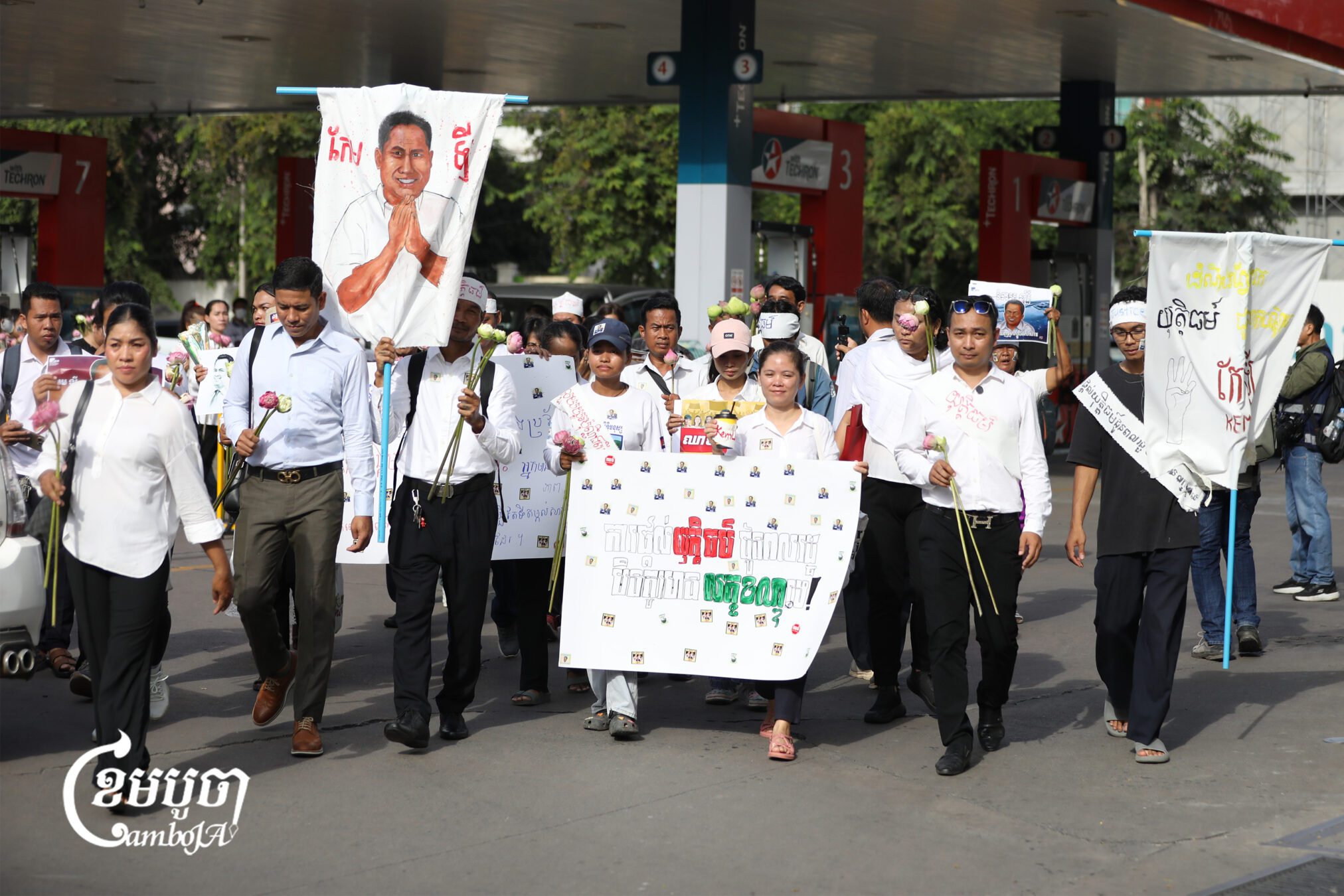
Dozens gathered at the Caltex gas station in the capital on Friday, where Kem Ley was fatally shot while drinking his morning coffee on July 10, 2016, laying flowers and chanting for justice.
Authorities have previously barred public commemorations for the popular commentator and political organizer, who earned a reputation for speaking candidly about corruption, land rights and the widening gap between Cambodia’s ruling elite and ordinary citizens.
Nget Moses, a digital security consultant and friend of Kem Ley, said the public archive contains more than 71,000 files totaling 48 gigabytes of speeches, writings, research and other documents, some of which have never before been made public.
Moses said he began preserving Kem Ley’s work the day he was killed to ensure it remained accessible to the public and a new generation of grassroots advocates.
“The dissemination of Dr. Kem Ley’s original writings will allow younger generations who value democracy to continue using those documents if they wish,” he said.
Among the previously unpublished material shared with CamboJA News is the full text of Kem Ley’s 2016 “Country Road Map,” which outlines his vision for state reform and stresses the importance of opposition victories in the 2017 commune elections. The opposition Cambodia National Rescue Party (CNRP) made significant gains in that vote before it was dissolved by the Supreme Court later that year following the arrest of party leader Kem Sokha on treason charges.
Former CNRP lawmaker Ou Chanrath said the party regularly sought Kem Ley’s input on policy reforms, including worker education.
“I used to request [on behalf of the party] for him to draft policies,” he said, adding that Cambodia’s political space has become significantly worse over the past decade.
That assessment is shared by rights groups and political analysts, who say Cambodia’s civic space has continued to shrink since Kem Ley’s death, with the long-ruling Cambodian People’s Party (CPP) consolidating power after the CNRP was dissolved and the Candlelight Party was disqualified from the 2023 election.
Government officials have repeatedly rejected criticism over Cambodia’s democratic trajectory and the handling of Kem Ley’s murder, while many supporters continue to question the official account of the killing.
The gunman, who initially identified himself as “Chuob Samlab” (Meet to Kill), was chased down and beaten by bystanders before his arrest. Police later identified him as Oeuth Ang, who said he killed Kem Ley over an unpaid debt. Many rejected that explanation, and Oeuth Ang was sentenced to life in prison in 2017 after a half-day trial criticized for falling short of fair trial standards. His conviction was later upheld on appeal.
Moeun Tola, Kem Ley’s research partner and executive director of labor rights group Central, said many Cambodians continue to suspect a broader conspiracy behind the murder. He highlighted the limited release of security camera footage.
“For me, I haven’t yet seen if the state has investigated enough to find the ‘real killer’,” Tola said.
Kem Ley’s wife, Bou Reachna, who was granted asylum in Australia after fleeing there with their five children following his death, did not immediately respond to a request for comment.
CPP spokesperson Chea Thyrith declined to comment on public perceptions of Kem Ley, saying his murder remains under the jurisdiction of the courts.
“It is the public’s right to express their opinion, but those rights must be exercised in accordance with the law,” he said.
Government spokesperson Pen Bona, Interior Ministry spokesperson Touch Sokhak, National Police spokesperson Chhay Kim Khoeun and Phnom Penh Municipal Court spokesperson Y Rin did not immediately respond to requests for comment.
Moses said the archive will be made available through a dedicated website during an event hosted by members of the Cambodian diaspora community in Australia.