Source: Camboja
Battambang province – When job offers finally came, Run Kakada turned them down.
The 40-year-old former migrant worker had registered with government employment programs after returning from Thailand last year. But the jobs were on banana plantations in Cambodia’s remote northeastern provinces, far from the elderly mother and nephew who depend on him.
“If I’m alone, I will go,” Kakada said from his family home in Battambang province. “But now I have an elderly mother and an orphan nephew.”
Kakada is among nearly one million Cambodian migrant workers who returned from Thailand after border tensions escalated into deadly clashes last year. While the government says most returnees have found work through employment programs in formal and informal sectors, many former migrants and a labor group say stable jobs remain difficult to find, particularly outside the country’s main economic centers.
Nearly a year after returning home, Kakada is still searching for steady employment. Since his relative left Battambang to seek work elsewhere, he has become the primary caregiver for his mother and nephew, who has a mental health condition that causes severe physical symptoms.
“When I arrived in Cambodia it was like starting from zero,” he said.
Kakada left Balang village in 2018 to work as a cleaner at an apartment complex in Pattaya, where earned about $500 a month and received benefits including accommodation and motorbike insurance.
Back home, he said, plantation jobs advertised through government recruitment drives paid roughly half that amount. Applications for cleaning jobs at hotels in Battambang have gone unanswered.
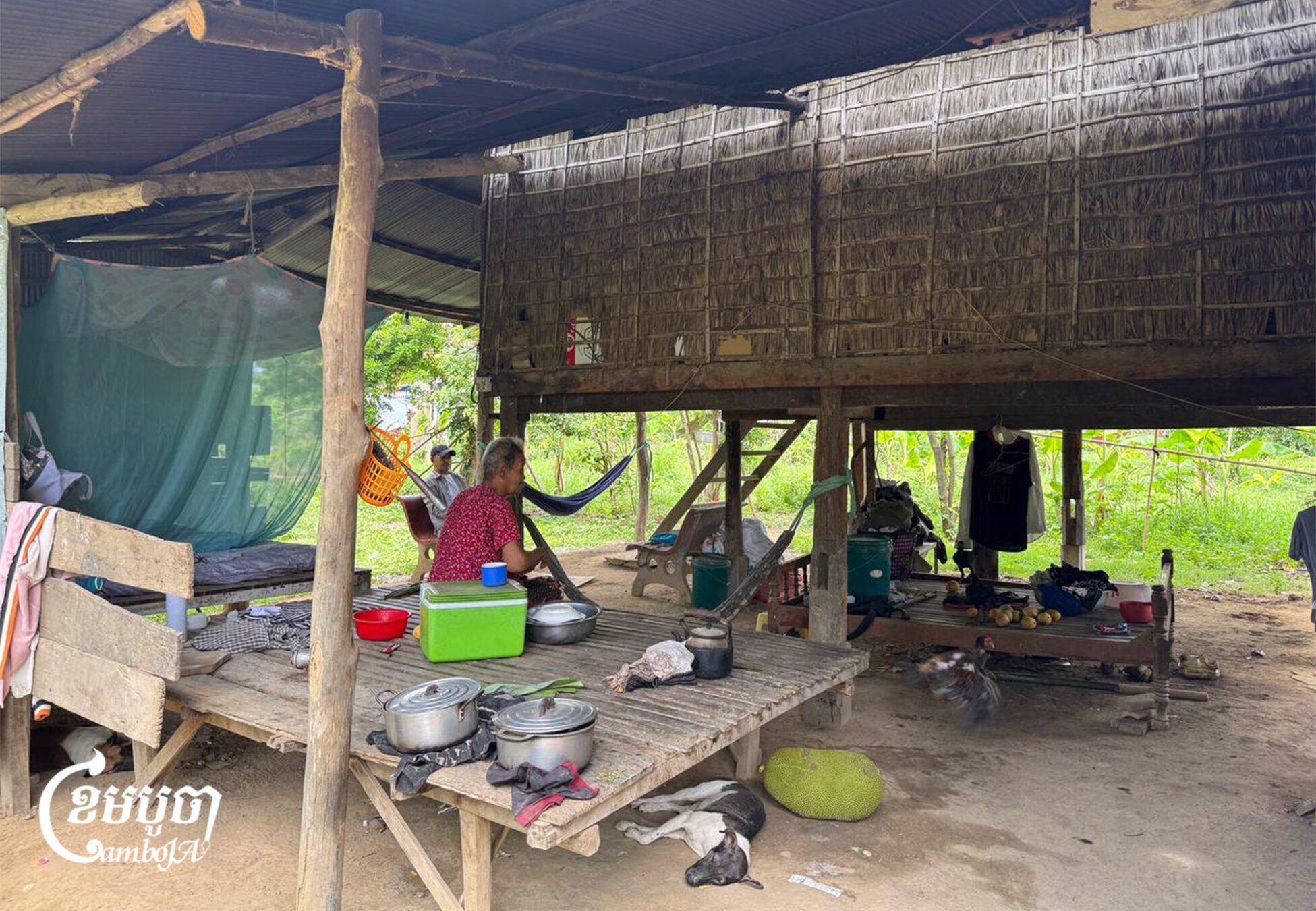
After months of searching, Kakada turned to self-employment. In April, he started a small grilled-quail business using income from renting out his mother’s 500-square-meter rice field, which brings in about $300 a year.
He usually earns less than $8 a day, he said, and sometimes takes home as little as $3 – just enough to buy food for his mother and nephew when supplemented with leftover quail.
For returnees such as Kakada, relocating for work is not an option. Most jobs offered through programs organized by the Ministry of Labor and Vocational Training are concentrated in economic and agro-industrial centers such as Phnom Penh and Ratanakiri, he said.
The ministry has said more than 80% of returned migrant workers have found jobs, mostly in garment and textile factories and agro-industry. But a March report from the Center for Alliance of Labor and Human Rights (Central) found that many still face barriers to decent work, including unsafe conditions, unpaid wages and limited opportunities in their hometowns.
Central surveyed over 500 returnees across 11 provinces between July and December 2025. It found more than 70% were in debt, with average household debt of $5,000, while 85% were unable to keep up with repayments. Average monthly income stood at $64, and more than half of respondents said they planned to migrate again.
Balang village chief Chea Han said many former migrant workers, who account for 30% of the village’s 500 households, initially moved to Phnom Penh after returning from Thailand to work in factories and construction.
But a significant number later returned to the village, taking daily wage jobs in cassava fields after facing problems including unpaid wages and exploitation by construction bosses, he said.
“Here in Battambang, it is very quiet,” Han said, referring to the lack of industrial jobs.
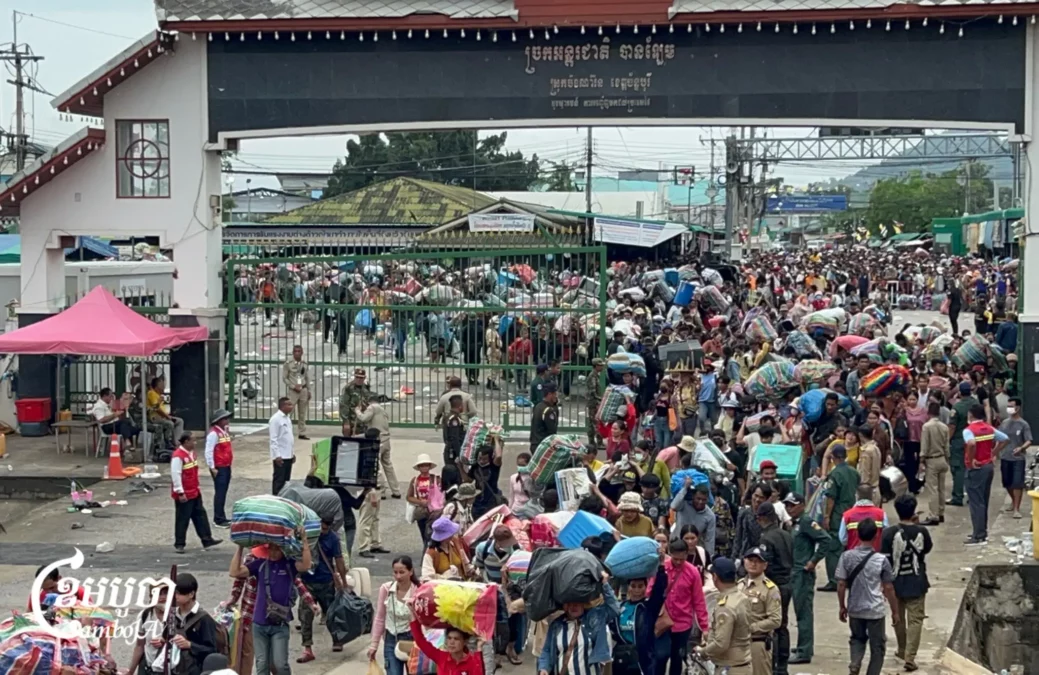
Labor Ministry spokesperson Sun Mesa said there were about 90,000 vacancies in the industrial sector available to returning migrant workers, although he did not specify where most of the jobs were located.
“But the challenge is that some people have not yet decided to work,” he said, adding that the ministry needed to ensure workers understood the salaries and benefits available.
Returnees, however, say the jobs on offer are too far from home or are not expected to provide enough income to support their families or repay debts.
Some have turned to small businesses, relying on savings accumulated during years of work in Thailand to start over.
Among them is Vin Phallyn, a 39-year-old mother of two living in a temporary settlement for residents displaced by the border conflict.
Unable to find stable work, Phallyn used her savings to open a small food stall near the settlement. But she said the business does not generate enough income to support her family.
Many residents in the settlement, which houses thousands of people displaced from past border clashes and disputes, are also struggling to find stable work.
“If there were factories near here, it would be great,” Phallyn said. “If there were factories in the province, we could return home every evening and stay together.”
Phallyn said she may ask her husband to look for work if their income does not improve, but jobs near their home are scarce, meaning he would likely have to migrate elsewhere alone.
She also called for additional cash and food assistance to help families trying to rebuild their lives.
Mesa did not immediately respond to a follow-up question about whether the government was offering cash or food assistance to returnees who start small businesses.
Labor advocates say the challenge extends beyond connecting returnees with jobs.
Many of the former migrant workers interviewed by Central who accepted factory and construction jobs through government employment programs after returning from Thailand left within months, said Dy Thehoya, the group’s head of anti-human trafficking and migration.
Workers cited low wages, wage disputes and difficult working conditions, he said.
Thehoya said the government should invest more in agro-processing plants and other industries in border provinces to create jobs closer to where most former migrant workers live and stimulate local economies.
“We do not need to rely only on Thailand’s labor market,” he said.
Yet some returnees continue to look across the border for work.
Thehoya said Central had documented cases of Cambodians seeking jobs in Thailand despite the border closures, paying brokers hundreds of dollars to secure work and cross through illegal routes.