Source: South China Morning Post
While Cambodia is becoming less reliant on Thai imports, its people in the western provinces are feeling the brunt of the border row
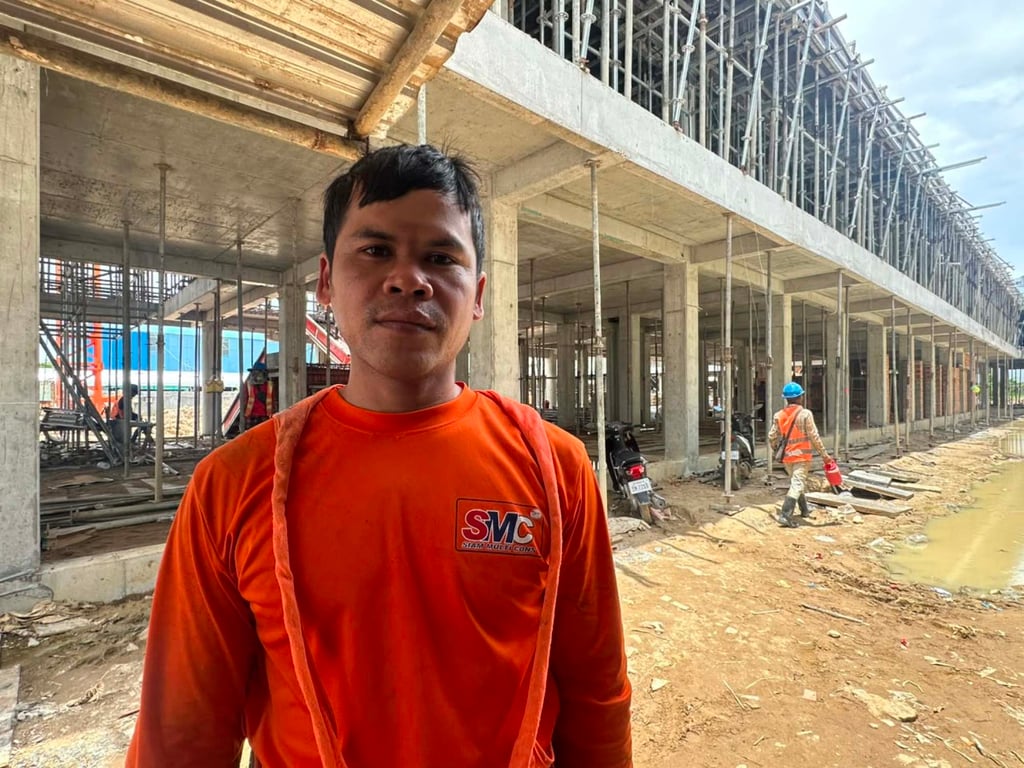
When he heard the government was helping returning migrant workers find jobs, Lors registered through his village chief.
“They registered my information and said they [the ministry officials] would contact me, but they never did,” he said.
Waiting was not an option for Lors, who had microloan debts to service. His predicament has become a familiar one in Cambodia’s west, where the border row with Thailand has hit jobs, remittances, trade and tourism.
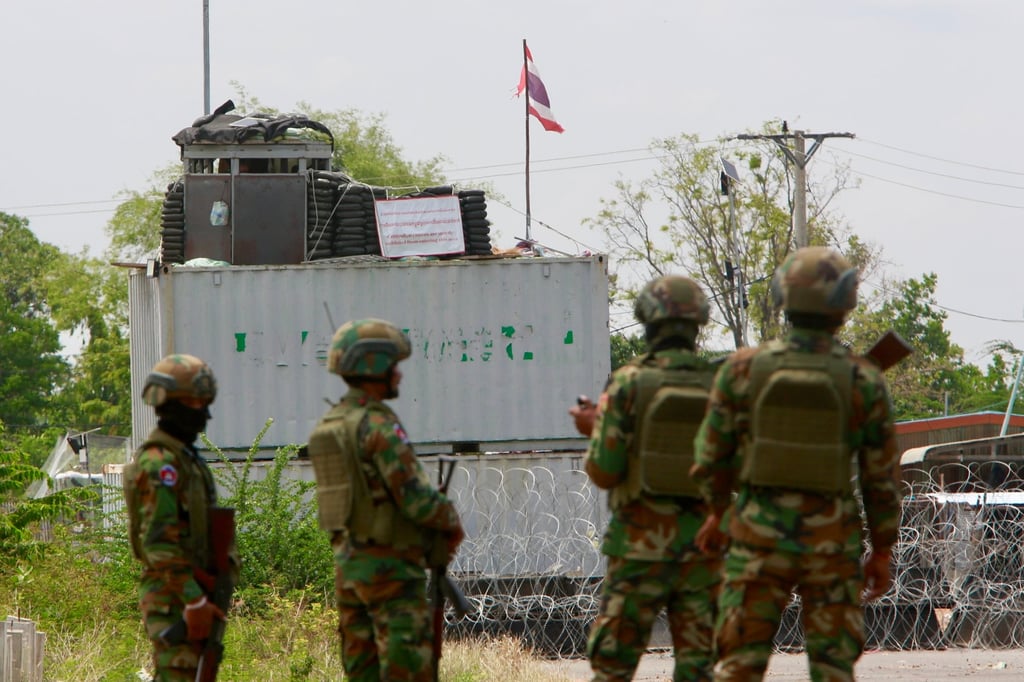
Now, after Thailand announced it had completed a 1.3km stretch of reinforced border fence on July 22, Cambodians face a more practical question: what happens if those links do not return? Nearly 1 million Cambodian nationals have returned since last year’s conflict.
Trade between the two neighbours has taken a hit. In the first five months of this year, two-way trade fell by almost 40 per cent to US$1.15 billion, according to official Cambodian preliminary figures.
In the meantime, Cambodia has tapped alternative fuel and industrial supply sources, such as from China and Singapore, to help cushion the impact on its economy. However, questions are being raised about whether the workaround would cushion the economic impact on Cambodia’s western provinces, which are most exposed to Thailand.
In a paper on the conflict’s economic impact released in May, Harvard’s Asia Centre fellow Richard Yarrow and Cambodian economist Kenh Sovath concluded that Cambodia had absorbed the initial shock better than expected, helped by trade diversification and alternative supply routes.
Yarrow, who is also a visiting scholar at the University of Tokyo, separately told This Week in Asia that Cambodia had been hit “more mildly than expected at the national level”, but cautioned that this did not mean the western provinces along the Thai border had recovered.
“The immediate costs of adjusting are much higher in the western Cambodian provinces,” he added, noting that the provinces’ economies had long relied on Thai tourists, traders, agricultural processors and supply chains.
For instance, cassava and other crops that previously crossed the border to Thailand for processing were redirected to Vietnam or domestic processors, even as this increased logistics costs and greater spoilage risks for farmers already facing weak prices. The conflict has also interrupted a Thai tourism market that had been particularly important to Cambodia’s western border towns.
Cambodia’s economy has become less dependent on Thailand in recent years. Vietnam overtook Thailand as Cambodia’s second-largest source of imports by 2022, according to the May paper citing official data.
Thailand’s share of Cambodia’s imports fell from around 15 to 20 per cent during the 2010s to roughly 12 per cent by 2024, according to Yarrow and Kenh.
Much of the fuel previously sourced from Thailand had already arrived by sea through Sihanoukville, while importers have also turned to other suppliers, including Singapore. China has also replaced Thai suppliers of products such as plastics, iron and steel components, and some textile inputs.
But Thailand remains an important source for fuel, vehicle parts and agricultural processing and plays a key role in Cambodia’s western provincial economies.
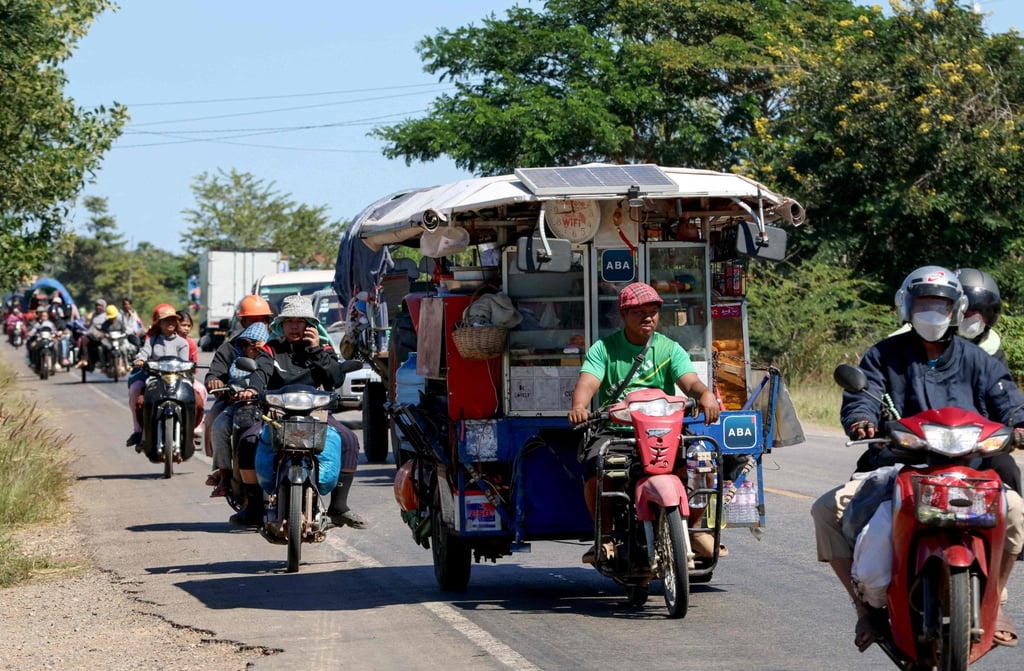
The bilateral row has cut off a higher-paying labour market for hundreds of thousands of Cambodians, whose families depend on their remittances.
Some Cambodians continue to return to Thailand for work, risking arrest by local border patrols. The Thai government has also not offered any feasible solution for Cambodian workers with expired permits, according to labour activists.
Those who could reach Thailand were undocumented migrant workers, and this put them at risk of workplace abuse and exploitation, said Tharo Khun, a programme manager at the non-government organisation Centre for Alliance of Labour and Human Rights (CENTRAL).
Without adequate protection, these Cambodians face risks of human trafficking, debt bondage and labour exploitation, according to Khun.
Lors said he had not considered returning to Thailand, but finding stable work in Cambodia had proved difficult. After leaving Siem Reap, he and his wife moved between construction sites in Phnom Penh, Sihanoukville and Bavet City in search of employment. Contractors at two of his jobs had failed to pay them.
In May, the couple found construction jobs in Phnom Penh’s Tuol Tumpoung district, but Lors said their income was still far short of what they had earned in Bangkok. While he has reduced his outstanding debt from US$10,000 to US$1500, he still has to pay about US$80 a month for household needs.
“After paying the loan and sending some money to support my child back home, there’s nothing left for us,” he said. To feed the family, Lors sometimes buys food on credit and repays later.
Thueng Rithy, 49, faces even more dire circumstances. A former security guard in Bangkok, Rithy’s house in Banteay Meanchey was only 300 metres from the border. He called the Cambodian Labour Ministry’s hotline seeking work, but was turned down due to his age.
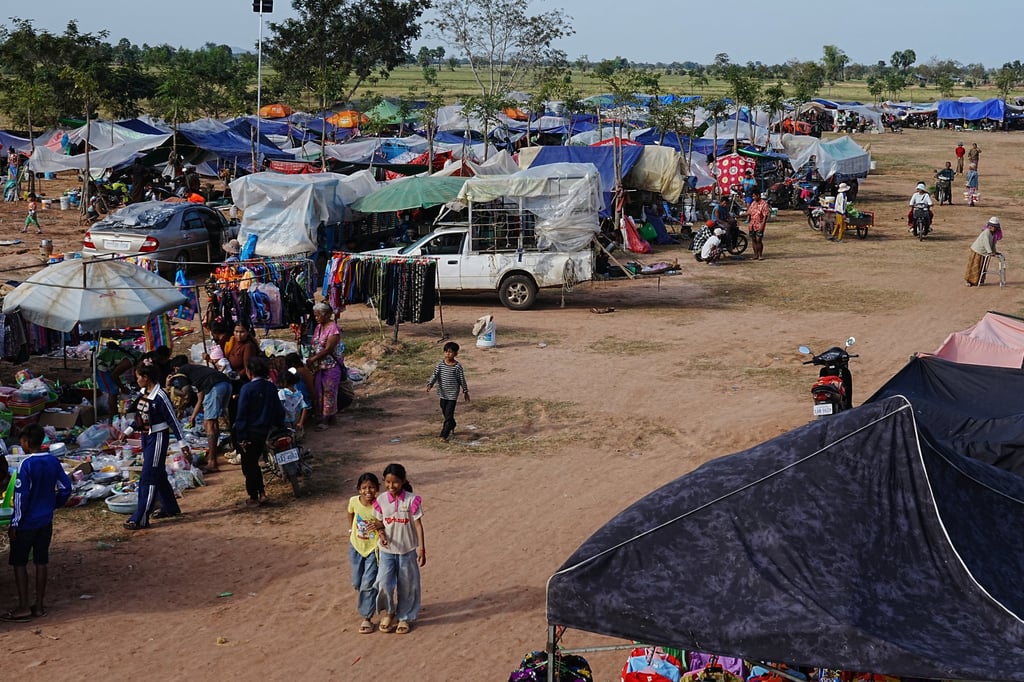
Rithy now lives in a displaced persons camp after his home was damaged and his village occupied by Thai forces. He owes US$3,000 to a microfinance institution, secured against land he can no longer access.
“I do not know yet how I will repay because my collateral land is occupied by the Thais,” Rithy said.
Khun said debt was the single biggest risk facing returning migrant workers and their families.
According to a survey released by CENTRAL in March, 71 per cent of Cambodians who had returned from Thailand reported being in debt, with an average household debt of US$5,000 to US$6,000 and 85 per cent of households unable to keep up with payments.
The government has responded to the influx of displaced workers by stepping up efforts through job placements, vocational training and financial relief.
Labour authorities have organised employment forums and directed workers to vacancies and training through a ministry hotline. For example, employment forums held in February and March this year saw 811 people getting jobs and another 413 registered for skills courses in the Battambang and Pursat provinces.
Last month, the ministry announced more than 8,000 vacancies across various sectors in three central lowland provinces aimed at returning workers from Thailand and local jobseekers.
The National Bank of Cambodia has also advised lenders to waive fees and penalties, defer interest and principal payments, and allow eligible displaced individuals and returning migrant workers to restructure their loans.
Despite the official support, Cambodia’s western provinces still face major challenges in helping displaced workers in a region that has attracted far less industrial investment than Phnom Penh and the southeast.
“If trade and wider relations do not recover, there’s a difficult adjustment process for the region over the next few years,” Yarrow said.