Source: Camboja
When Cambodia’s largest casino fired 1,300 workers in 2021, it triggered a labour dispute that has since seen union leaders jailed and demonstrations forcibly dispersed. Five years on, the workers have not backed down.
Earlier this year, debt collectors came to Houn Bopha’s home in Arey Ksat for the second time. She owes 14,000 USD on a microfinance loan, and she has nothing to give them.
Bopha, 36, runs a barbershop in the small riverside village in Kandal province, just across the Mekong from Phnom Penh. Business is hard. Some male customers refuse to let a woman cut their hair. Others in the village know her as a union activist and keep their distance.
“They came and lectured me – why haven’t I paid back their money?” she said. “I told them: whether you come or not, my condition is still the same. I will repay when NagaWorld’s settlement is finalised.”
When NagaWorld, Cambodia’s largest casino and the only one licensed to operate in the capital, dismissed about 1,300 workers in 2021, Bopha’s name was not on the layoff list. She joined the strike anyway, and losing her salary as a dealer made it impossible to keep up with her repayments.
“I joined the strike for workers’ rights,” she said. “I wanted to have an independent union, not the company’s union.”
From strike to stalemate
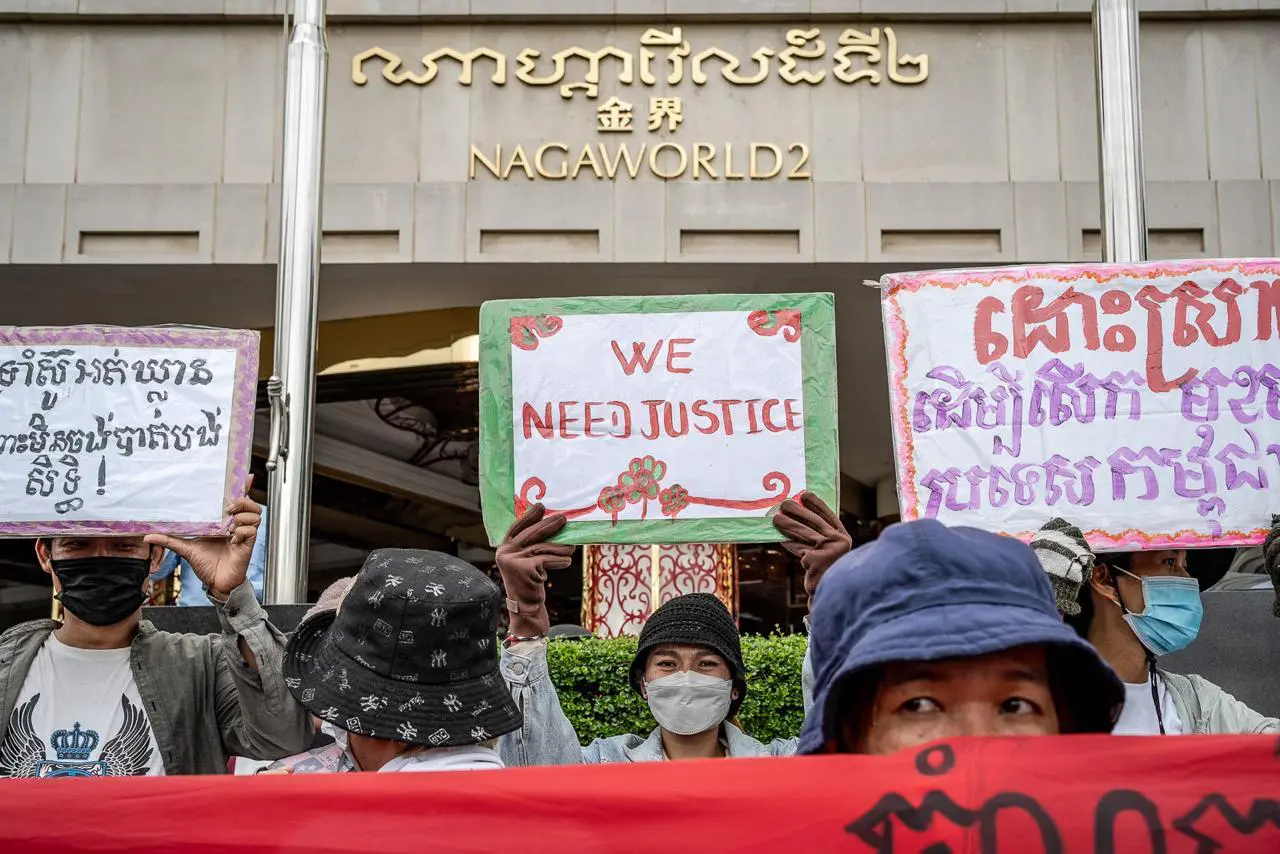
The desire for an independent union was precisely what NagaWorld sought to extinguish, the workers say. The dismissals in April 2021, they argued, had nothing to do with the pandemic, they were designed to destroy their collective bargaining power. After negotiations failed, they launched a strike in December 2021. The Phnom Penh Municipal Court declared it illegal within days.
What followed was years of confrontation. The striking workers, mostly women, received no response from the Ministry of Labour or the Royal Government. Authorities dispersed demonstrations repeatedly. Workers were injured during some of those dispersals. One worker told Radio Free Asia she miscarried after police shoved her during a protest. The company filed complaints against thirteen union members, accusing them of breaking and entering while picketing outside the casino.
Authorities also arrested key union leaders on criminal incitement charges. Chhim Sithar, the union’s president, was sentenced to two years in prison and released in September 2024.
Following her release, Sithar and the remaining workers shifted from formal strike action to a sustained campaign of demonstrations and advocacy. Their core demands have not changed: reinstatement, union recognition, and compensation backdated to the start of the dispute.
The campaign has now lasted five years. There is a Cambodian proverb the workers invoke: farming requires water. Sustaining a long fight requires resources, and for many of those involved, economic survival has become as pressing as the demands themselves. Bopha, Sithar, and fellow activist Mam Sovathin argue that the prolonged deadlock has worked in the company’s favour, wearing workers down financially and pushing some toward individual settlements.

Four hundred still standing
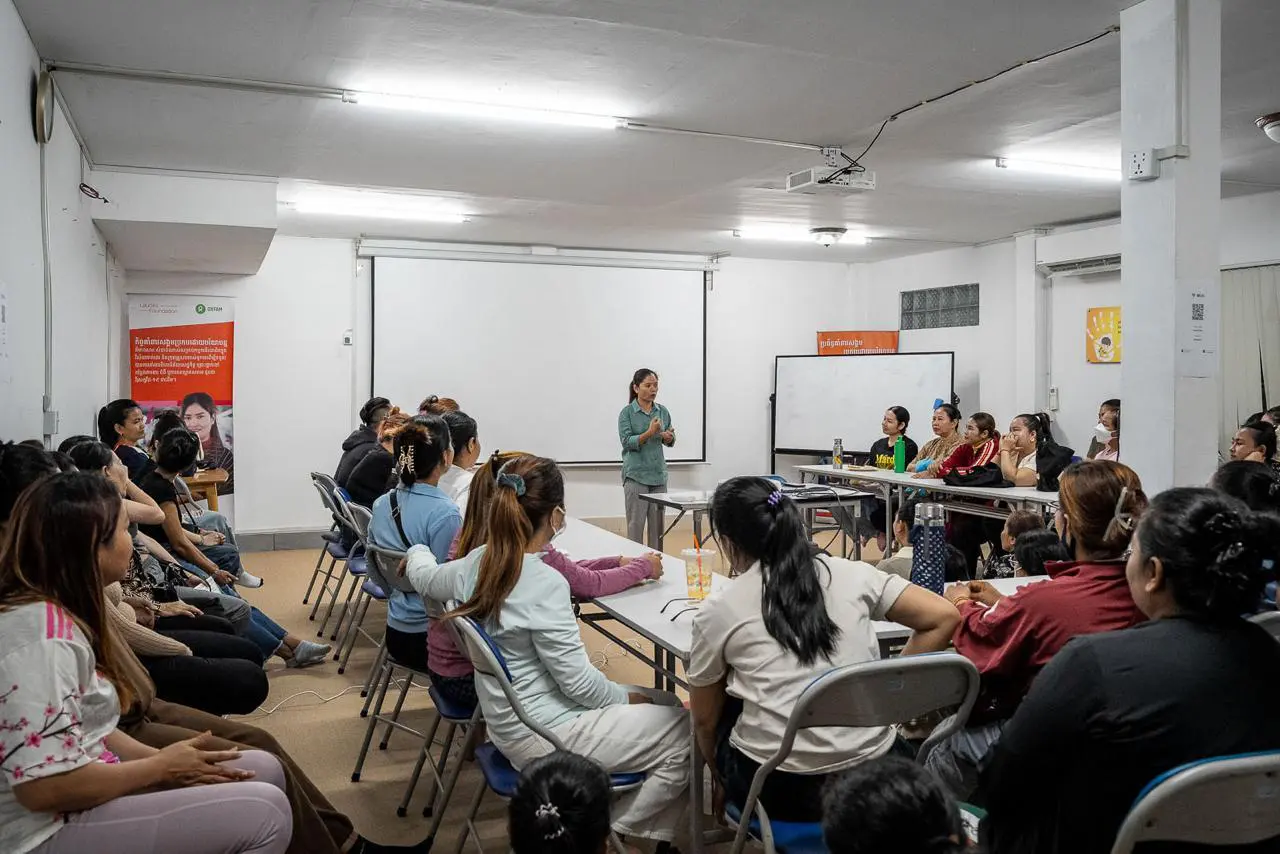
Of the roughly 1,300 workers originally dismissed, around 400 remain actively involved in the campaign, according to Sithar. The rest have scattered, to provinces, to informal work, to small businesses and family trades. Organising has become harder. Demonstrations that once happened several times a month now take place once every three weeks or so.
“We continue to advocate for our demands, but we can’t do it as often as before, sometimes only once every three weeks or once a month,” Sithar told HaRDstories.
For those still involved, participation has become a logistical feat. Mam Sovathin, a food promoter dismissed after six years at NagaWorld, found work last year but kept her involvement in the campaign hidden from her new employer. She is a widow supporting a daughter and an ageing parent, and the risk of losing the job was real.
“I got a job in 2025, but I tried to hide my identity so the company didn’t know,” she said.
Her employer found out. For now, she said, it has not cost her the position. “They just told me to ensure it doesn’t affect my official working hours,” she said.
During her lunch break, Sovathin would travel across Phnom Penh to stand briefly with her colleagues at the demonstration site before heading back. “The trip took up the whole hour,” she said. “But just seeing them left me feeling deeply satisfied.”
In June she was summoned by an investigating judge, one of more than ten workers facing charges over a damaged barrier during a protest outside the casino in August 2022. She said investigators questioned her and showed her images from a livestream of the demonstration, but presented no evidence that she had caused any damage.
She remains under bail conditions that bar her from relocating and require monthly reports to a police station – and, she said, as many as 100 other workers could still be summoned on the same charge.
A deadlock with wider stakes
Five years of negotiations have produced nothing. The union has attended more than thirty meetings with the Ministry of Labour and NagaWorld representatives. The company’s offer has not changed: selected workers may return, provided they accept a flat payout and drop the dispute entirely. Those who refuse, like Bopha, remain outside.
“They called me back to work at first, but I refused since the core issue wasn’t resolved,” she said.
The union says the Ministry has not been a neutral party. Officials have used pressure and persuasion to push workers toward individual settlements, according to Sithar – a claim the Ministry has not addressed directly. Its spokesperson has repeatedly directed the workers to take their case to court, according to local media reports.
Sithar considers that advice hollow. Court proceedings demand time and money the workers do not have. She knows this from experience: she was arrested and charged with criminal incitement for leading a strike that the law explicitly permits.
The mockery has been harder to take than the legal obstacles. At a recent meeting with officials, Sithar said, authorities pointed out that the striking workers had no salary and yet appeared to be eating well – kept going, as they have been throughout the campaign, by donations from supporters and sympathisers.
“It’s disheartening,” Sithar said, “when citizens face injustice from their employers and the authorities respond by mocking them.”
The stakes, the union argues, extend well beyond NagaWorld. If the company succeeds in dismantling an independent union without consequence, it sets a precedent every employer in Cambodia can follow.
“It could be a model for other bosses, use the same tactics, expel the union, and face no repercussions,” Sithar said. “Even though these rights are recognised by law, by the constitution, and by international conventions.”
Cambodia’s treatment of the case is being watched. The International Labour Organization is monitoring the dispute, and the country’s preferential trade arrangements with democratic partners could come under pressure if it remains unresolved, Sithar warned.
NagaWorld did not respond to requests for comment.
Room for resolution?
Not everyone has given up on a negotiated settlement. Khun Tharo, programme manager at CENTRAL, a Cambodian labour rights organisation, said government-led mediation remains the most realistic path to resolution, but only if the authorities are willing to play an honest role.
“International mechanisms are unavoidable at this point,” he said. “But the key factor is the authorities’ willingness to mediate and reach an agreement that all parties can accept.”
Tharo said concessions would be necessary on all sides. A resolution, he argued, would not only restore the workers’ rights but give the government an opportunity to demonstrate that Cambodia’s labour laws are more than words on paper.
The Ministry of Labour was approached for comment but did not reply.
At midday, Bopha’s barbershop is quiet. It is usually quiet. She sits with her scissors and waits – for customers, for the debt collectors, for a dispute that has consumed five years of her life to finally reach an end.
“If this does not end in my generation, it will just have to be fought by the next,” she said. “If we succeed, I know the next generation’s work environment will be much better off.”